
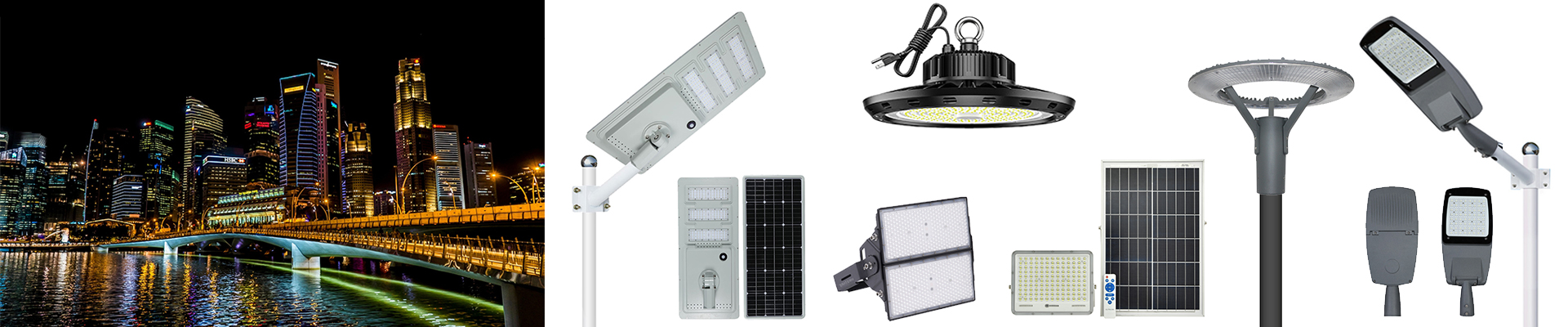

The global transition toward carbon neutrality has accelerated the demand for resilient, energy-independent infrastructure, placing renewable illumination at the forefront of urban planning. As municipalities worldwide seek to reduce grid dependency and operational costs, the integration of solar technology into public lighting systems has evolved from a niche alternative to a primary structural requirement. This shift requires not only efficient photovoltaic components but also high-quality structural support systems capable of withstanding diverse environmental stressors. The expertise provided by a specialized China Solar Led Street Light Pole Manufacturer is instrumental in this transition, ensuring that the physical backbone of these sustainable systems meets the rigorous safety and durability standards required for modern smart-city initiatives.
Evolution of Modern Lighting Infrastructure
The trajectory of the outdoor lighting industry has seen a profound shift over the past decade, moving away from simple illumination toward integrated energy solutions. Established in 2010, Zhongshan Hongzhun Lighting has spent more than 12 years navigating this technological evolution, accumulating extensive experience in the design and production of specialized lighting supports. This history reflects a broader industrial trend where success is defined by a commitment to pioneering and innovation. By consistently introducing new products and participating in extensive industry training, manufacturers have been able to absorb advanced manufacturing technologies and processing techniques from both domestic and international counterparts.
In the current market, the role of a Solar Led Street Light Pole Factory extends beyond simple metal fabrication. It involves a deep understanding of mechanical engineering, wind load calculations, and corrosion resistance. The integration of solar panels and high-capacity battery storage onto a single pole structure necessitates a rethink of structural balance and weight distribution. Modern production facilities now utilize automated welding and precision cutting to ensure that every pole can support the increasing surface area of high-efficiency solar modules without compromising its safety profile.
Technical Innovations in Material and Coating
One of the most significant advancements in the sector involves the treatment of materials to ensure longevity in varied climates. Infrastructure located in coastal or high-humidity regions faces the constant threat of oxidation. To mitigate this, professional manufacturers have adopted advanced hot-dip galvanization processes, often supplemented by electrostatic powder coating. This dual-layer protection creates a barrier that prevents salt spray and moisture from reaching the steel core, thereby extending the service life of the installation to several decades.
Furthermore, the aesthetic requirements of urban environments have become more sophisticated. While functionality remains the priority, the design of the pole must complement the architectural language of the surrounding area. Manufacturers now offer a range of conical, polygonal, and decorative profiles. These designs are not merely for appearance; polygonal shapes, for example, can offer superior wind resistance and structural rigidity compared to traditional circular tubes. This balance of form and function is a hallmark of an industry that has moved from basic utility to high-tech engineering.
Solar Integration and Smart Grid Compatibility
As we look toward the future of sustainable lighting, the “smart” element cannot be overlooked. The modern street light pole is no longer a passive object; it is increasingly becoming a node in an interconnected urban network. Innovations showcased at recent international trade exhibitions highlight the inclusion of IoT (Internet of Things) sensors, 5G base station housing, and EV charging ports directly within the pole structure. This multifunctionality requires a manufacturer to provide modular designs that can accommodate internal cabling and specialized mounting brackets without affecting the pole’s structural integrity.
The synergy between solar power and LED technology is the cornerstone of this movement. By utilizing high-lumen LED chips and intelligent controllers, the energy captured during daylight hours is managed with extreme precision. Dimming schedules, motion sensing, and remote monitoring are now standard features that allow for significant energy savings. This level of sophistication is only possible when the physical housing—the pole itself—is designed with a focus on ease of maintenance and technical adaptability.
Global Market Dynamics and Quality Assurance
The international demand for solar lighting solutions is driven by a variety of factors, from rural electrification projects in developing regions to “Green City” initiatives in Europe and North America. To serve such a diverse clientele, a manufacturer must adhere to a strict set of international business concepts and quality standards. Certifications such as CE, RoHS, and IP66 waterproof ratings are essential benchmarks that provide assurance to project managers and government contractors.
The experience gained over 12 years in the industry allows for a nuanced understanding of these regional requirements. For instance, a project in a hurricane-prone region will require poles with thicker wall dimensions and reinforced base plates, whereas a project in a high-temperature desert environment will prioritize the heat dissipation of the battery housing and the UV resistance of the coating. This ability to customize solutions based on environmental data is what distinguishes a specialized factory from a general metal fabricator.
Operational Excellence and Sustainable Manufacturing
Sustainability is not only a feature of the end product but also a requirement for the manufacturing process itself. Modern factories are increasingly adopting cleaner production methods, reducing waste in the galvanization process and utilizing eco-friendly powders for coating. By absorbing advanced manufacturing processes from global peers, leading firms have optimized their production lines to be more resource-efficient.
This commitment to operational excellence is often supported by a philosophy where innovation is considered the foundation of the business. By constantly refining the manufacturing process, companies can produce higher-quality poles at a more competitive cost, making sustainable lighting accessible to a broader range of communities. The accumulated experience of a decade or more in the sector provides the institutional knowledge necessary to predict market fluctuations and supply chain challenges, ensuring a stable supply for large-scale infrastructure projects.
Application Scenarios and Case Studies
The versatility of solar LED lighting systems makes them suitable for an expansive array of applications. Beyond traditional roadways, these systems are now common in industrial parks, university campuses, and remote mining sites where grid extension is cost-prohibitive. In park and recreational areas, solar lighting provides safety without the need for disruptive trenching or underground wiring, preserving the natural landscape.
Case studies from international projects often highlight the reliability of these systems during extreme weather events. When traditional power grids fail during storms, solar-powered lights continue to function, providing critical visibility for emergency services and public safety. This resilience is a direct result of the meticulous design and manufacturing of the support poles, which must remain standing and functional even under high wind loads. The collaboration between the design team and the manufacturing floor ensures that every technical specification is met with precision.
Future Perspectives on Urban Illumination
The path forward for the lighting industry is defined by the integration of renewable energy and intelligent management. We are likely to see even more efficient solar cells integrated directly into the surface of the pole, or “vertical solar” designs that are less susceptible to dust accumulation and shading. As battery technology improves, the storage capacity will increase, allowing for several days of autonomous operation even during periods of heavy cloud cover.
The role of the pole manufacturer will continue to evolve, becoming a provider of integrated smart-city hardware. This transition requires a culture of continuous learning and adaptation—values that are central to companies that have thrived in the sector for over a decade. By maintaining a focus on pioneering spirit and absorbing the latest global processing techniques, manufacturers are well-positioned to lead the next generation of outdoor lighting solutions.
The global shift toward greener infrastructure is an ongoing process that relies on the strength and innovation of specialized manufacturing. From the selection of raw materials to the application of advanced coatings and the integration of smart technology, every step in the production of a solar LED street light pole is a testament to the progress made in the field of sustainable engineering. By leveraging years of experience and a commitment to quality, the industry provides the essential components that illuminate our world responsibly. For those interested in exploring the technical specifications and structural diversity of these modern lighting supports, additional resources can be found at https://www.hongzhungroup.com/.
Post time: Mar-11-2026