
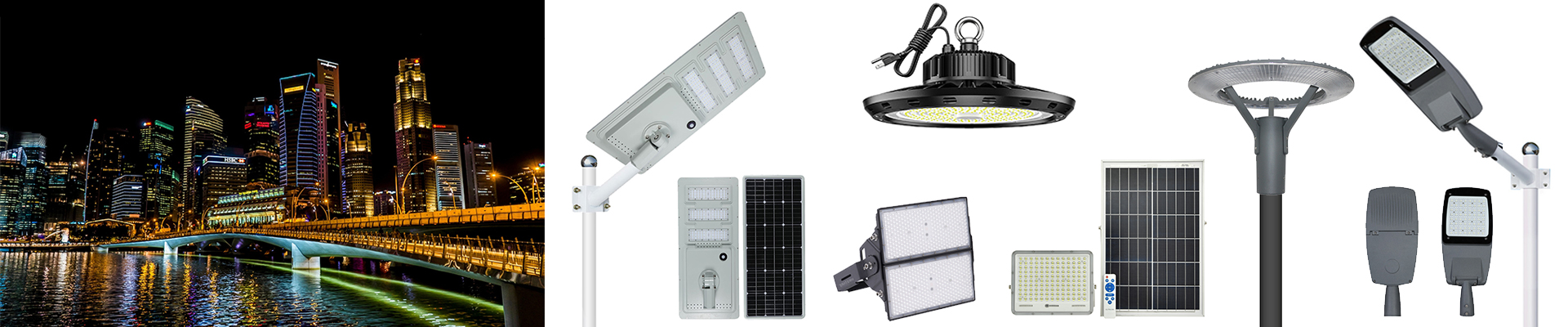
As the world moves towards sustainable energy solutions, solar street lighting has emerged as a popular choice for urban and rural areas alike. Hongzhun Lighting, a leading LED lighting manufacturer, specializes in providing innovative and efficient split solar street lights. This article aims to guide you through the process of calculating the power needs for these lights, ensuring optimal performance and energy efficiency.
Understanding Split Solar Street Lights
Split solar street lights are designed with separate components: the solar panel, LED lamp, controller, and battery. These components work together to harness solar energy, store it, and convert it into light. The split design allows for flexibility in installation and maintenance, making it a favored option for various lighting applications.
Before delving into power calculations, it’s crucial to understand the individual roles of these components:
- Solar Panel: Captures sunlight and converts it into electrical energy.
- Battery: Stores the electrical energy generated by the solar panel.
- LED Lamp: Utilizes the stored energy to produce light.
- Controller: Manages the flow of energy between the solar panel, battery, and LED lamp.
Factors Influencing Power Needs
Several factors influence the power requirements of split solar street lights. Understanding these factors is essential for accurate power calculations:
220v led garden lights
split solar street light
led street lights
1. Geographic Location
The amount of sunlight available varies by location. Areas closer to the equator typically receive more sunlight, which can significantly affect the energy generation capacity of solar panels. It’s important to consider the average solar insolation for your specific location.
2. Lighting Requirements
The intensity and duration of lighting required will impact the power needs. For example, a street that needs to be illuminated for 12 hours will require more energy compared to one that only needs lighting for 6 hours.
3. LED Efficiency
The efficiency of the LED lamps used in the street lights will determine how much energy is converted into light. High-efficiency LEDs will require less power to produce the same amount of light compared to less efficient ones.
4. Battery Capacity
The battery must be capable of storing enough energy to power the lights during periods of low sunlight. The capacity of the battery should be chosen based on the expected energy consumption and the duration of autonomy required.
Steps to Calculate Power Needs
To accurately calculate the power needs for split solar street lights, follow these steps:
Step 1: Determine the Total Energy Requirement
The first step is to calculate the total energy required to power the LED lamps. This can be done using the formula:
Total Energy (Wh) = LED Power (W) × Operating Hours (h)
For instance, if the LED lamp has a power rating of 30W and needs to operate for 10 hours, the total energy requirement would be 300Wh.
Step 2: Calculate the Solar Panel Capacity
The solar panel must be able to generate enough energy to meet the daily energy requirement. This can be calculated using the formula:
Solar Panel Capacity (W) = Total Energy (Wh) / Peak Sun Hours (h)
Peak sun hours refer to the average number of hours per day when the sunlight is strong enough to generate maximum power. If the location receives an average of 5 peak sun hours, the required solar panel capacity would be 60W (300Wh / 5h).
Step 3: Determine Battery Capacity
The battery should be able to store enough energy to power the lights during periods of low sunlight or overcast days. Battery capacity can be calculated using the formula:
Battery Capacity (Ah) = Total Energy (Wh) / Battery Voltage (V)
Assuming a battery voltage of 12V, the required battery capacity would be 25Ah (300Wh / 12V).
Step 4: Choose an Appropriate Controller
The controller manages the flow of energy between the solar panel, battery, and LED lamp. Ensure the controller is compatible with the voltage and current ratings of the system. It’s advisable to select a controller with a slightly higher rating to accommodate any future expansions or upgrades.
Practical Considerations
While the above calculations provide a theoretical framework, real-world conditions may necessitate adjustments. Here are some practical considerations to keep in mind:
1. Efficiency Losses
Consider efficiency losses in the system due to factors like temperature, dust accumulation on solar panels, and aging of components. It’s advisable to add a safety margin of 10-20% to the calculated values to account for these losses.
2. Seasonal Variations
Seasonal changes can affect sunlight availability. Ensure the system is designed to accommodate the lowest sunlight periods, typically during winter months.
3. Maintenance and Monitoring
Regular maintenance and monitoring of the system can help identify and rectify issues promptly, ensuring optimal performance. Consider investing in a monitoring system to track the performance of the solar street lights.
Conclusion
Calculating the power needs for split solar street lights involves a thorough understanding of the components and factors influencing energy requirements. By following the outlined steps and considering practical aspects, you can design an efficient and reliable solar street lighting system. Hongzhun Lighting, with its expertise in LED lighting solutions, is committed to providing high-quality products that meet the diverse needs of its clients.
By embracing solar street lighting, we take a significant step towards sustainable energy solutions, reducing our carbon footprint and contributing to a greener future.
For more information on solar street lighting solutions, feel free to contact Hongzhun Lighting, your trusted partner in LED lighting innovation.
Post time: Jan-21-2025